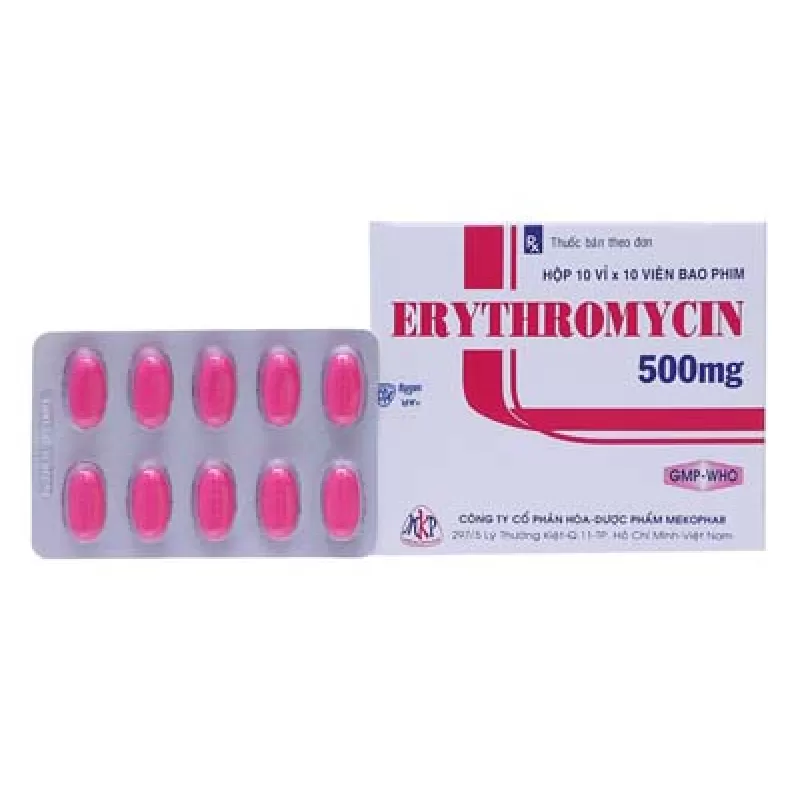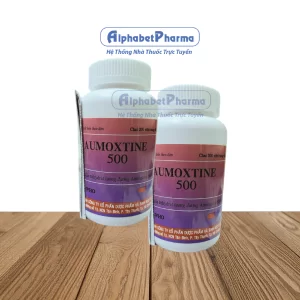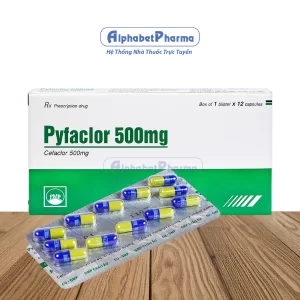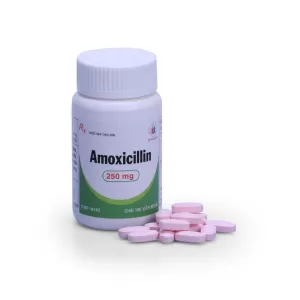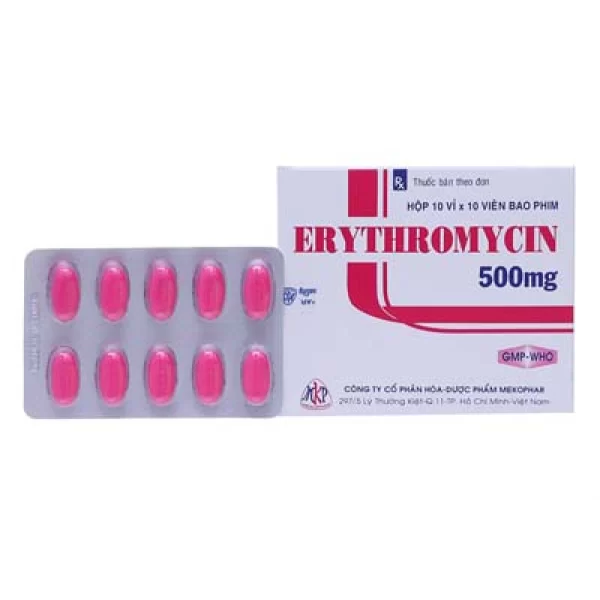











– Infections of the respiratory tract, skin and soft tissues, genitourinary tract and gastrointestinal tract.
– In combination with Neomycin for prophylaxis of infections during abdominal surgery.
– Alternative therapy for b– lactam antibiotics in those that are allergic to Penicillin.
– Alternative therapy for Penicillin in long– term prophylaxis of acute rheumatism.
– Hypersensitivity to any ingredient of the medicine.
– In patients with history of hepatic disorders associated with Erythromycin uses, or a history of deafness, or patients with acute porphyria.
– Concomitantly with Terfenadine, Astemizole.
– It is recommended to administer the drug on empty stomach, if there is GI adverse effects the drug may be taken with food.
– As prescribed by the physician.
– Recommended dosage: + Adults: 500 – 1,000mg, 2 – 3 times daily.
+ Children: 30 – 50mg/kg/day in 2 – 3 divided doses.
– Cautions should be exercised when Erythromycin is administered to patients with liver disease or liver dysfunction.
– Cautions should be exercised when Erythromycin is administered to patients with arrhythmia or other cardiac disease. In such cases, drug
interaction may result in fatality.
– It is not known to affect the ability of driving and operating machine.
Store at temperature below 30°C, protect from light.
– Hypersensitivity to any ingredient of the medicine.
– In patients with history of hepatic disorders associated with Erythromycin uses, or a history of deafness, or patients with acute porphyria.
– Concomitantly with Terfenadine, Astemizole.
– It is recommended to administer the drug on empty stomach, if there is GI adverse effects the drug may be taken with food.
– As prescribed by the physician.
– Recommended dosage: + Adults: 500 – 1,000mg, 2 – 3 times daily.
+ Children: 30 – 50mg/kg/day in 2 – 3 divided doses.