













In ophthalmology, surface anesthetic eye drops are commonly used to relieve pain or facilitate diagnostic and therapeutic procedures. The two common medications you mentioned are:
1. Alcaine 0.5% (15ml)
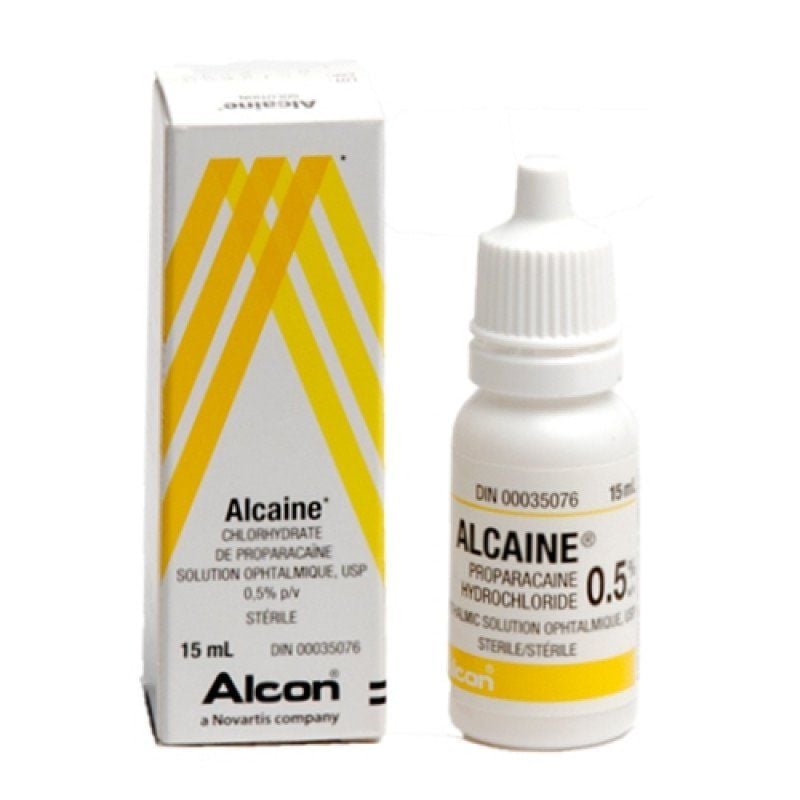
- Composition: Proparacaine HCl 0.5%.
- Indications:
- Anesthetizes the surface of the cornea and conjunctiva during procedures such as measuring intraocular pressure, removing sutures, removing foreign bodies, or performing diagnostic tests.
- Effects are quick, usually starting within 30 seconds and lasting about 15–20 minutes.
- Dosage and administration:
- Usually 1–2 drops per eye before the procedure.
- Contraindications:
- Hypersensitivity to ingredients of the drug.
- Do not use long term as it may cause corneal damage.
2. Tetracain 0.5% (10ml)

- Composition: Tetracaine Hydrochloride.
- Indications:
- More invasive minor surgical procedures.
- Removal of corneal sutures or foreign bodies.
- Advantages:
- Greater potency for procedures requiring deeper anesthesia.
- Disadvantages:
- Higher likelihood of transient burning or stinging.
- Slightly more corneal epithelial toxicity compared to Proparacaine.
Important Notes:
- Caution: Prolonged or unsupervised use can lead to corneal damage or delayed healing.
- Usage: Both should only be administered by healthcare professionals.
- Storage: Follow manufacturer instructions, typically refrigerated for stability.
Both Alcaine and Tetracaine are highly effective anesthetics, chosen based on the procedure's specific requirements and the patient's condition.
Hỏi Đáp & Bình Luận Chuyên Môn
Đặt câu hỏi để được đội ngũ Dược sĩ Alphabet Pharma phản hồi và giải đáp trực tiếp.